
Small Boat Wrench is an independent publisher of DIY maintenance and troubleshooting guides for small boats. Outboards from 2.5 to 150 hp, trolling motors and pontoons, written for US owners who do the work themselves in a driveway or at a slip.
We are not a dealer, not a manufacturer and not a marine shop. We have no affiliation with Mercury, Yamaha, Suzuki, Evinrude, Johnson, Tohatsu, Honda or any other brand, so the advice you read here is not steered by anyone selling you an engine.
From flush muffs to fogging oil, the goal is simple: steps you can follow with the cowling off and your hands dirty.
Why this site exists
The mission: keep small outboards running without the shop bill
Most small boats get bought used, with no service history and a motor of unknown habits. The marina has a six week wait in April, and the labor rate makes a simple water pump job feel expensive. So you do it yourself, or you want to learn how.
That is who we write for. Every guide starts from a concrete job or symptom: milky gear oil on the drain screw, a tell-tale stream (the small jet of cooling water that shows the pump is working) that has gone weak, a carb that will not idle after winter storage.
We tell you when a cheap fix is enough. We also tell you when a repair outvalues an old two-stroke, and when the job belongs with a certified marine tech. Honest advice both ways is worth more than a guide that always says yes, you can.
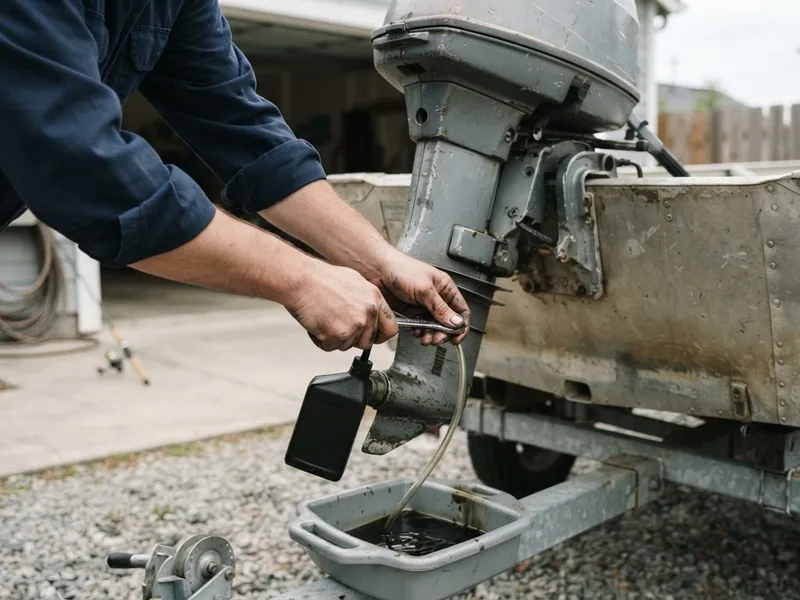
Guides organized the way you actually own a boat
You do not own an outboard in general. You own a Mercury 9.9 four-stroke, or a Johnson 15 two-stroke from the nineties, or a Yamaha 115 on the back of a pontoon. So our guides are organized by engine brand, horsepower band and job, and a Mercury 9.9 owner never has to read about a Yamaha 115.
Steps use US units, basic hand tools and a garden hose. Where order matters, we number the steps. Where a term is new, we explain it in one plain clause the first time it appears, fogging (spraying protective oil into the cylinders before storage) included.
Spec values always come from the owner's or service manual for your exact model and serial range. We never borrow a number from another engine and hope it fits, and we tell you to verify the same way before you torque anything down.
What you can expect from every guide
- Organized by brand, horsepower band and job, so you only read about your engine.
- US units, basic hand tools and steps written for the cowling off and your hands dirty.
- Honest calls: when a cheap fix is enough, when an old two-stroke is not worth the bill.
- Specs only from the owner's or service manual for your exact model and serial range.
- Fully independent: no dealer ties, no manufacturer affiliation, no shop to send you to.
Who this is for
Written for owners of small boats, bought used, kept running
Our readers run aluminum fishing boats, jon boats, skiffs, bass boats and pontoons with an outboard between 2.5 and 150 hp. Many bought used and have no idea when the lower unit oil was last changed. They search on concrete jobs and symptoms, from winterizing to serial number lookups.
If you are sizing a trolling motor for a jon boat, or checking a used Mercury, Johnson or Evinrude before you hand over the cash, you are in the right place too. Our serial number and model year lookups exist for exactly that moment in the parking lot.
If you would rather hand every job to a shop, this site will not change your mind. If you want to know which jobs you can safely take on, and which ones you should not, it will.
How a guide comes together
Our approach, from symptom to published steps
Start with a real job or symptom
Every guide begins with something concrete: a no start after storage, water in the gear oil, a trolling motor that pulls to one side. No theory pieces without a wrench in them.
Narrow to the exact engine family
We name the brand, horsepower, two-stroke or four-stroke, carbureted or EFI and the approximate model years where it matters, because the same job looks different across families.
Write the steps with US units and basic tools
Socket sizes in inches, temperatures in Fahrenheit, a garden hose where one works. Steps are numbered only where the order matters, like pulling the top vent screw before the bottom drain screw.
Check specs against the manual
Torque values, oil capacities and plug gaps are only published when they come from the owner's or service manual for that model and serial range. Otherwise we point you to the manual.
State the limits of the job
Each guide says when the cheap fix is enough, when the repair outvalues the engine, and when the work belongs with a certified marine tech.
One calendar, three seasons of work
Small boat maintenance follows your year, not a shop schedule. Spring commissioning gets the fuel system, plugs and water pump ready. Summer is running gear and small fixes between trips. Fall is winterizing and fogging before the first hard freeze.
Our guides are grouped around that three-season rhythm, so the job you need in October is not buried behind the one you needed in April.
The result is a library you can work through with basic tools and a free Saturday, one job at a time.
Questions, corrections or a guide you want to see
If you spotted something that does not match the manual for your model and serial range, or you have a job you cannot find covered, tell us. Reader questions shape what we write next.